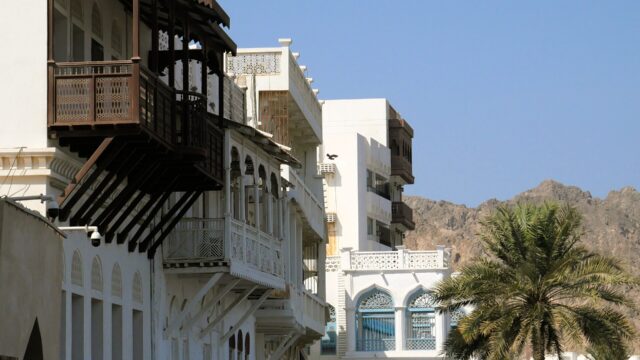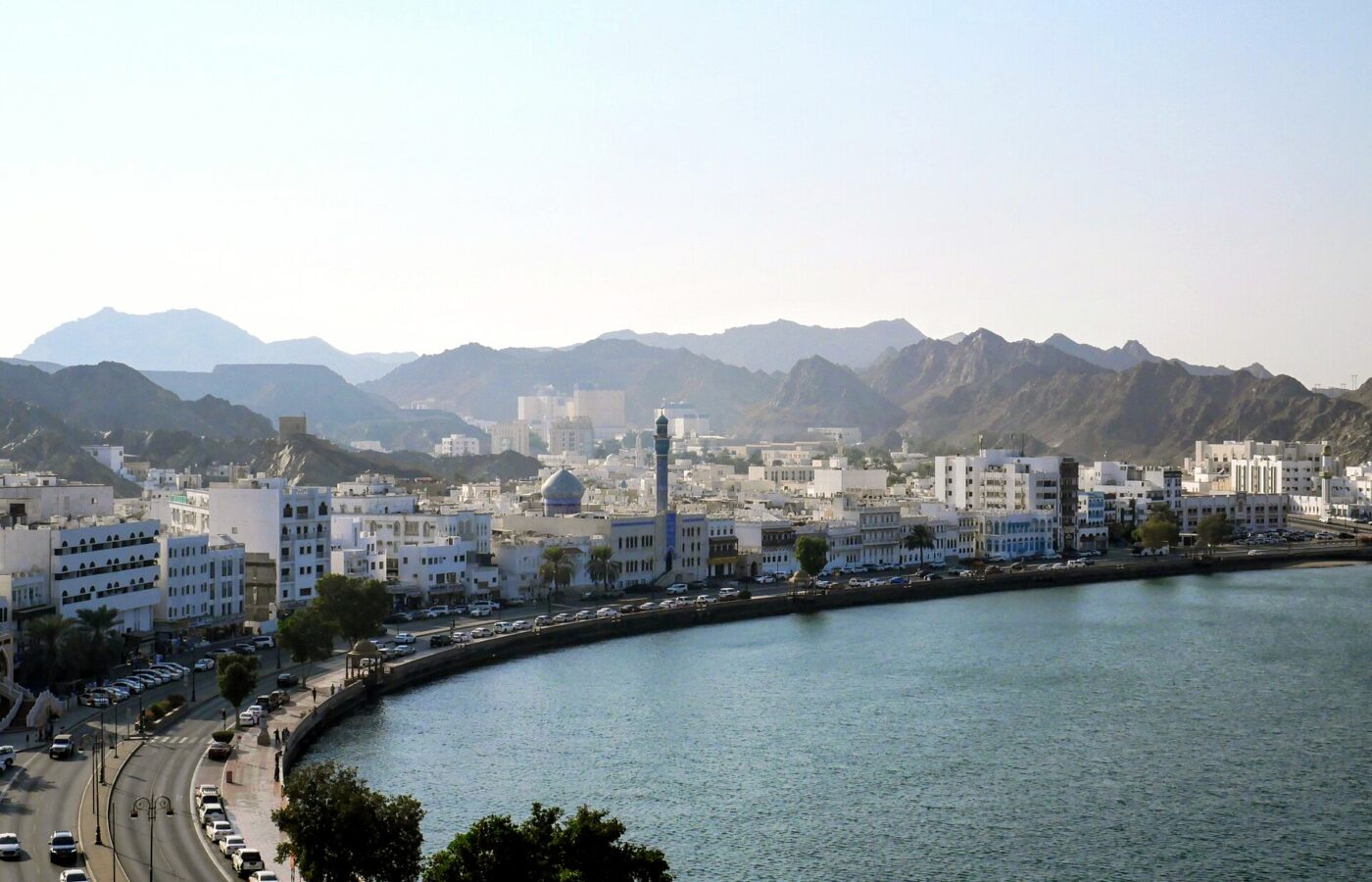
The Corniche runs for roughly three kilometres along Muttrah’s natural harbour, which is the reason Muscat exists where it does. Merchant houses face the water on one side and dhows and cruise ships sit on the other. It is the part of the capital that still looks like the trading port it was.
At the southern end is Muttrah Souq, one of the oldest working markets in the Arab world — frankincense, silver, textiles and a great deal of everything else, under a covered timber roof. Above the harbour sits Muttrah Fort, built by the Portuguese in the 1580s during their occupation of the coast.
What it is like to live near
Muttrah itself is dense, old and characterful, with limited modern housing stock. Most people who want to be near it live in Ruwi — the commercial district immediately inland, well supplied with apartments — or in Darsait. Both are among the more affordable parts of the capital, and both are a short drive from the corniche.
The trade-off is traffic and age of building. If you want new construction with parking and a pool, you will be looking further west along the coast.