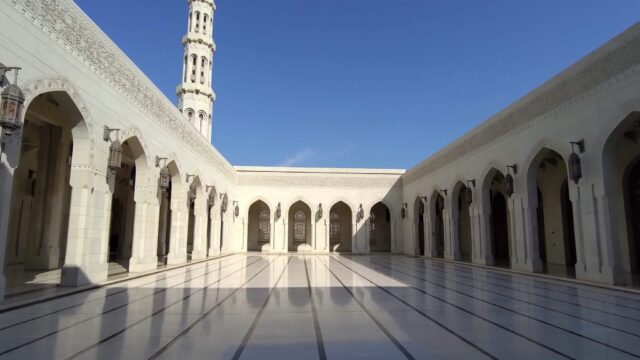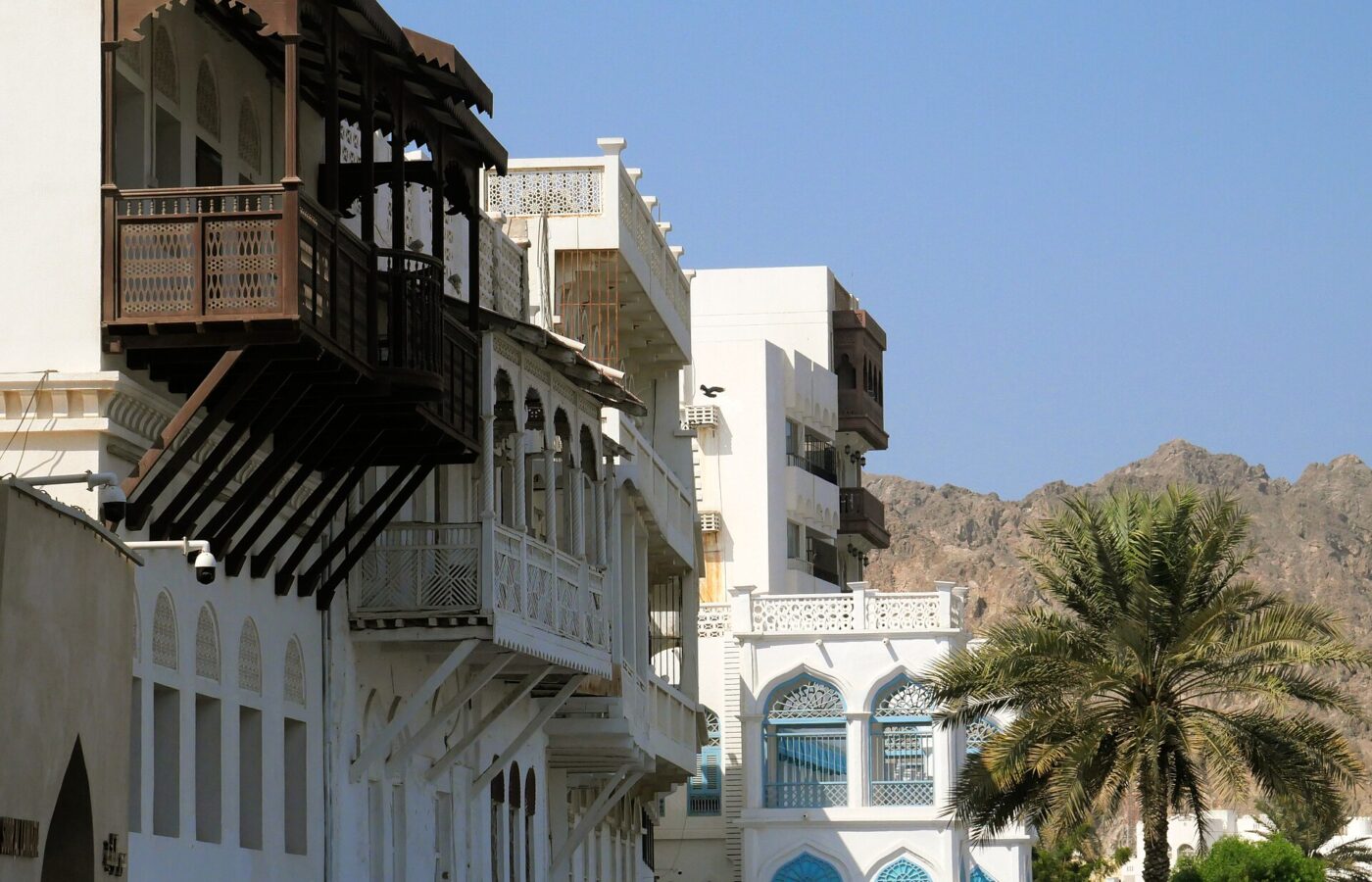
The houses along the Muttrah waterfront are the clearest surviving example of Omani merchant architecture. Thick whitewashed walls, small deep-set windows and, above the street, carved wooden balconies screened with lattice — the arrangement that lets air move through a room while keeping the sun and the street out.
The woodwork reflects where Oman’s merchants sailed. Omani trade reached the Indian coast, the Gulf and Zanzibar, and the carving, joinery and painted detail carry all three influences. Doors were often the most expensive element of a house, and many were made in India to Omani order.
Why it matters if you are buying
Very little of this stock trades on the open market, and what does usually needs structural work and sits in a conservation context with real constraints. It is worth understanding anyway: the vocabulary — the mashrabiya screen, the shaded courtyard, the thick wall — reappears in a lot of contemporary Omani villa design, and knowing the original tells you which modern versions are doing it properly.