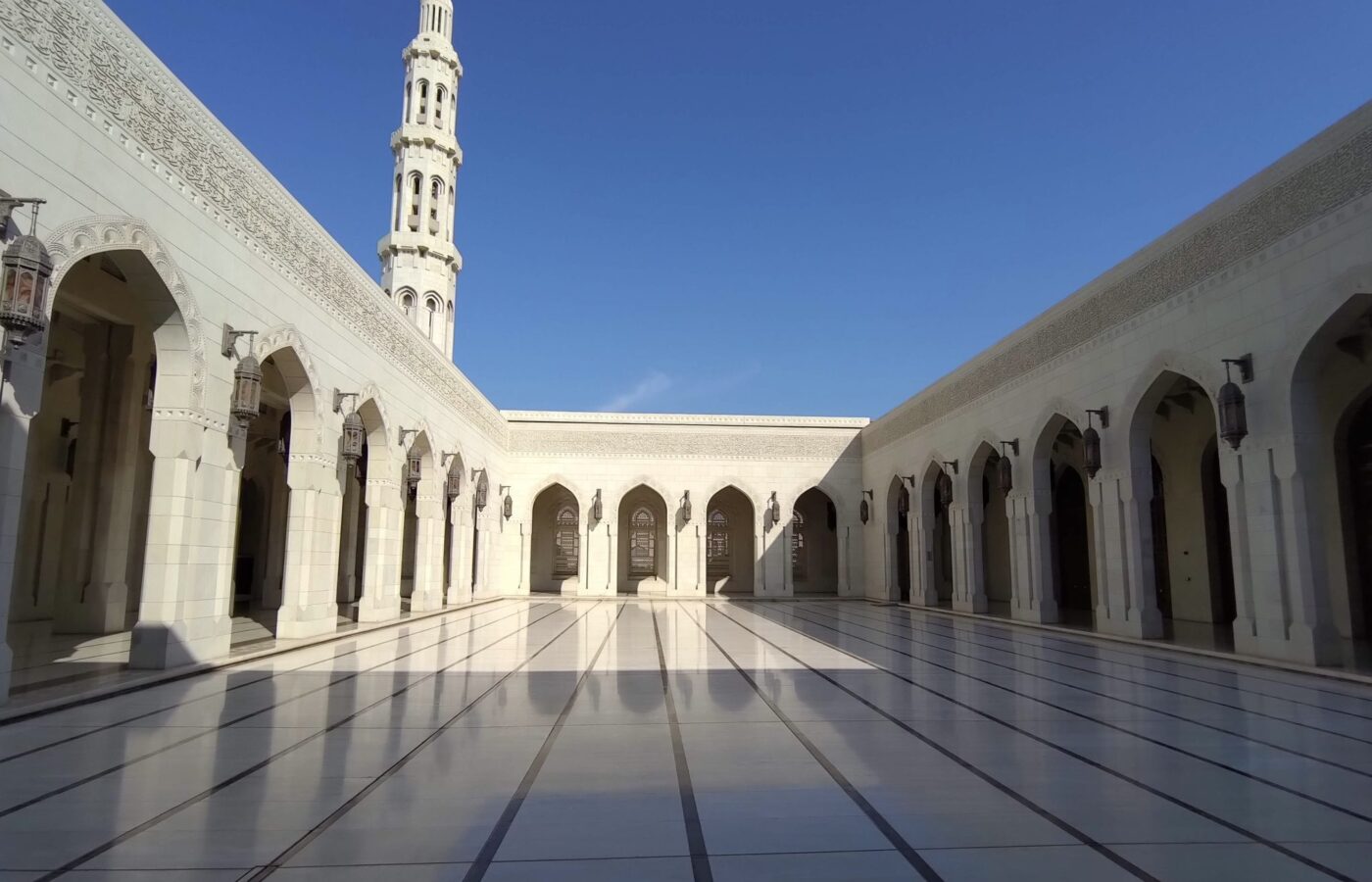
The mosque was commissioned by Sultan Qaboos bin Said and opened in 2001 after about six years of construction. The complex accommodates roughly 20,000 worshippers across the main prayer hall, the women’s hall and the courtyards, and it is the largest mosque in the country.
Two things inside are usually singled out. The main prayer hall carpet covers over 4,000 square metres and was hand-woven in Iran in a single piece — for some years it was the largest of its kind in the world. Above it hangs a Swarovski crystal chandelier standing some fourteen metres tall.
The building is worth seeing for the stonework as much as the set pieces: Indian sandstone, a restrained palette, and a courtyard arcade that is very carefully proportioned.
Visiting
Non-Muslim visitors are welcome outside prayer times, typically Saturday to Thursday, early morning. Dress is covered arms and legs, and women should cover their hair. Confirm current hours before travelling — they change around Ramadan and public holidays.
Living nearby
The mosque sits in Bawshar, on the edge of the band of western suburbs where most of Muscat’s newer housing is. Al Khuwair and Ghubrah are the established apartment districts either side of it, close to embassies, schools and the main highway; Azaiba runs down to the beach and is quieter and more villa-led.